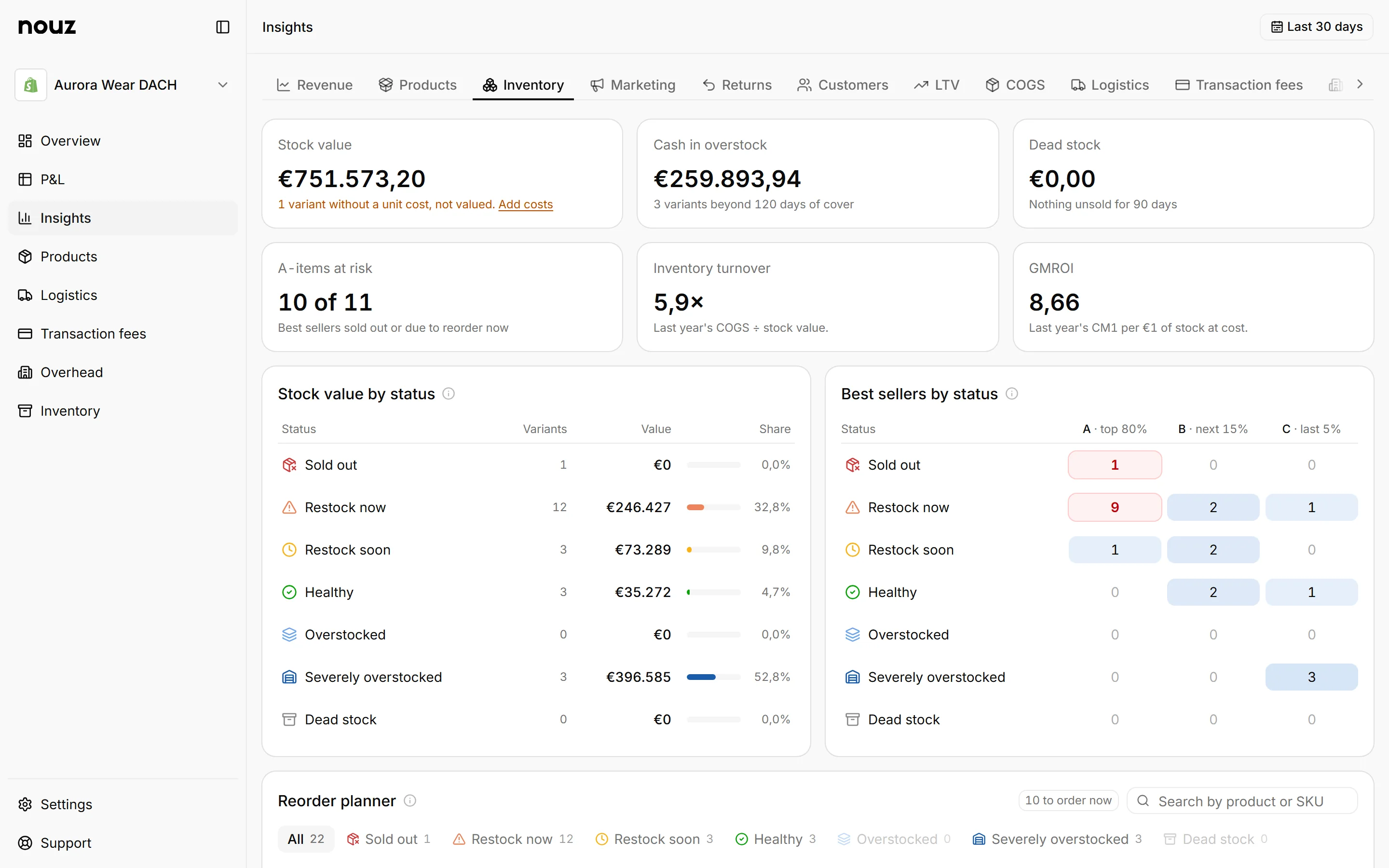
Inventory turnover is cost of goods sold divided by average inventory at cost: how many times a year the shelf empties and refills. A turnover of four means the same capital earned margin four times, which is why it is the inventory counterpart to margin itself.
Higher is usually better, because the same capital earns margin more often, but pushed too far it becomes stockouts, and a stockout on a winning product costs more margin than slow stock ever ties up.
It is the inventory counterpart to margin: two stores with the same CM1 can have very different returns on the money they tie up, and the one turning stock six times needs half the capital to earn the same year. The days the stock sits are also the largest part of the cash conversion cycle, the time a euro spent on stock takes to come back.
Both sides of the division depend on honest unit costs at honest dates, which is exactly what Shopify's COGS report cannot hold: one cost field per variant means last year's turnover changes every time a supplier reprices.
nouz shows it on Insights, Inventory as last year's cost of goods over today's stock value at cost. nouz reads today's stock level and keeps no history of past levels, so today's value stands in for the average, and a store younger than a year is annualised from the days it has. GMROI sits beside it, the same stock weighed by the margin it earns.