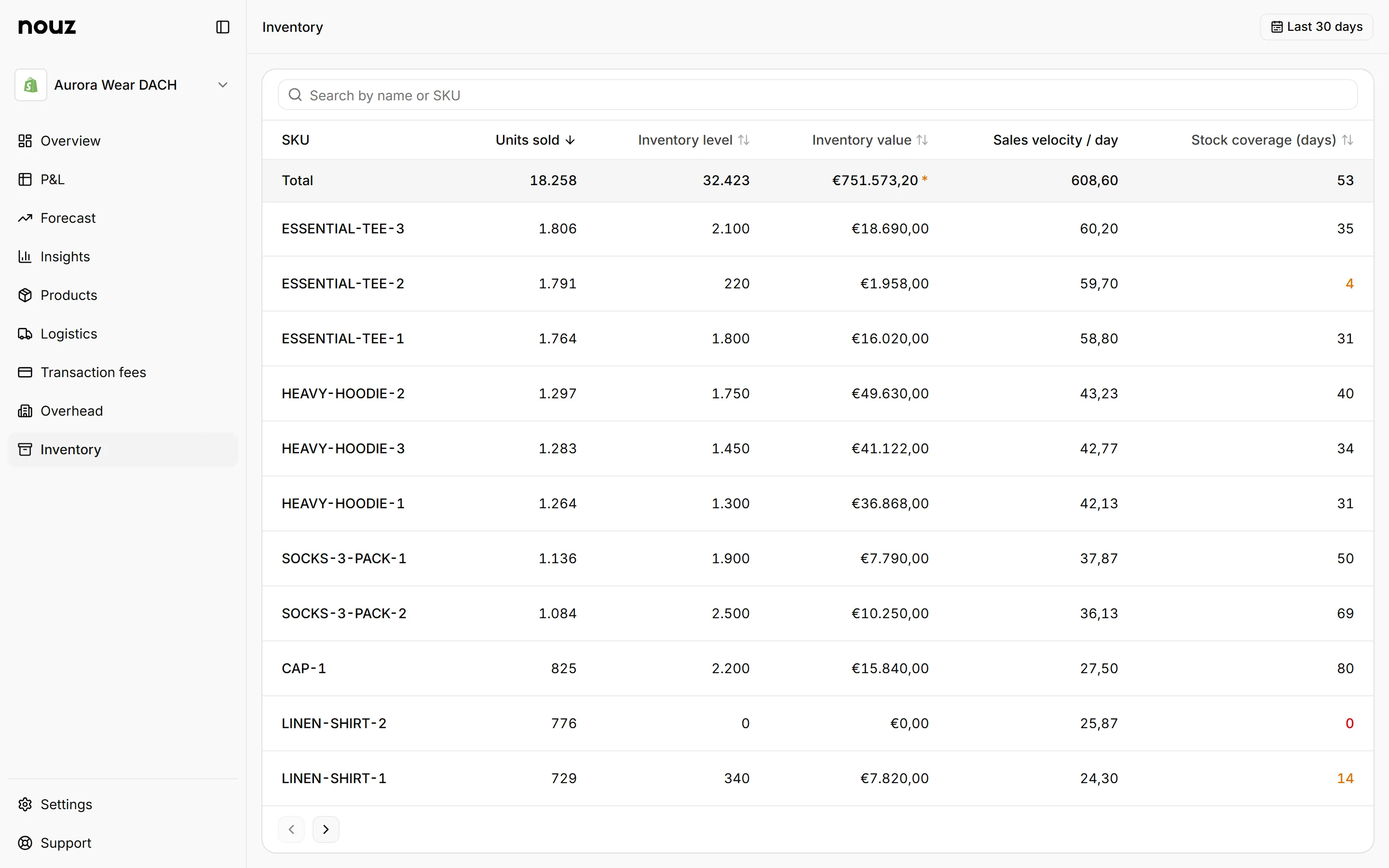
Inventory value at cost is units on hand multiplied by the unit cost effective today: the money currently tied up in stock. It is the number a bank or an investor means when they ask about inventory, and valuing it at retail price answers a question nobody asked.
Valuing it at retail price flatters the number and answers a question nobody asked. Cost is what you paid and what is at risk; retail is a hope with a discount rate attached.
Stock with no unit cost should be shown as unknown rather than as zero, otherwise the total quietly shrinks in a way that looks like good news. In nouz the gaps close on the Products page, one variant at a time, with the date each cost started applying; the product cost list is the sheet to gather them in first. For a physical count, the inventory count sheet values every line at cost and prices the variance.
Read it beside stock coverage: a healthy total can hide one expensive line asleep on the shelf, and the pair of numbers together is what tells you where the working capital actually went. GMROI then says what that working capital earns: a year of margin for every euro of it.