Packaging EPR, extended producer responsibility, is the fee an ecommerce seller pays per kilogram of packaging placed on a market, split by material and by country. It is charged on the box, the filler and the label rather than on the product, and the rate comes from the seller's own scheme contract.
The charge follows where the packaging becomes waste: sell into three countries and you answer to three schemes, each with its own registration and its own tariff per material. Since the EU packaging regulation began applying in August 2026, every member state runs some version of this, and Germany's LUCID register is the example most DACH sellers meet first. Where a store owes it, market by market, is set out in packaging fees across borders.
The arithmetic per parcel is small and relentless: each material's weight times the scheme's rate per kilogram, summed. For a typical corrugated parcel it lands around 4 to 8 cents, more for plastic-heavy protection, and because every parcel of a store shares one packaging composition, the same fraction repeats on every single shipment.
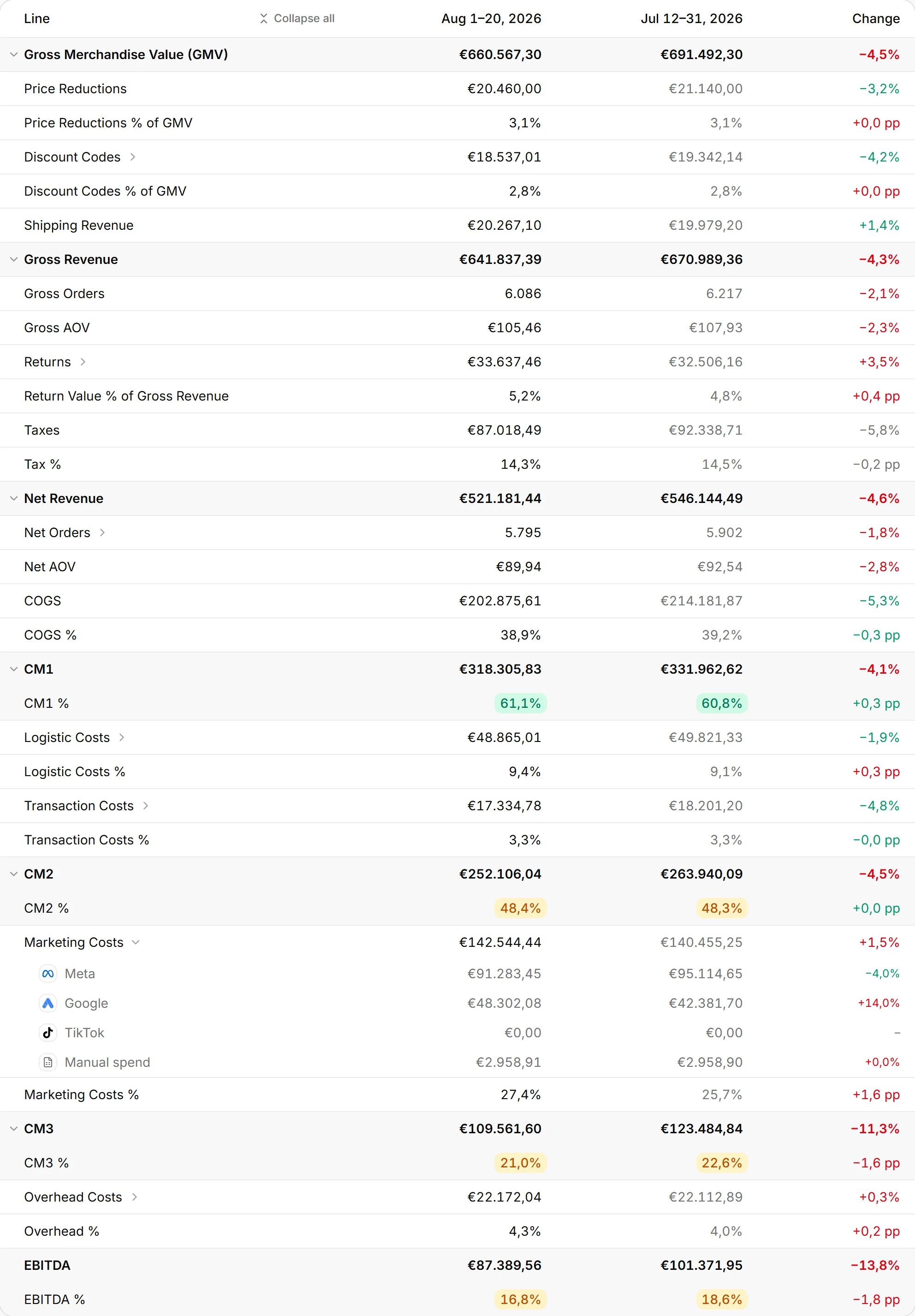
On a P&L it splits in two. The per-parcel fee scales with orders, so it belongs inside logistics cost on line 21. Scheme membership, minimum fees and any authorised representative have no per-order driver at all and belong in overhead on line 31. That mirrors how the bills actually arrive, and it keeps CM2 honest about what scales. The rates themselves come from your scheme contract, as where EPR rates come from explains.
Rates are the one thing this page will not tell you: schemes quote privately and revise annually, so the only correct rate is the one in your own contract. The packaging EPR calculator takes that rate and your parcel's material weights and works out the fee per parcel and per year; what the whole regime costs a seller in practice is walked through in packaging EPR cost per parcel.