In Shopify a partial refund starts from the order: enter how many of each item to refund, adjust the refund amount if needed, add shipping if it should go back too, and decide whether the items return to stock. Restock items and the email to the customer are both ticked by default. The order then shows as Partially refunded, and further partial refunds can follow until the original amount is used up.
The distinction matters for the denominators. An order refunded in part still shipped, still cost a parcel and a fee, and still counted as an order; only the money movement belongs in returns. Removing it from the count entirely would understate the costs the store really incurred. An exchange tests the rule hardest, because exchanges on a P&L are two events wearing one word.
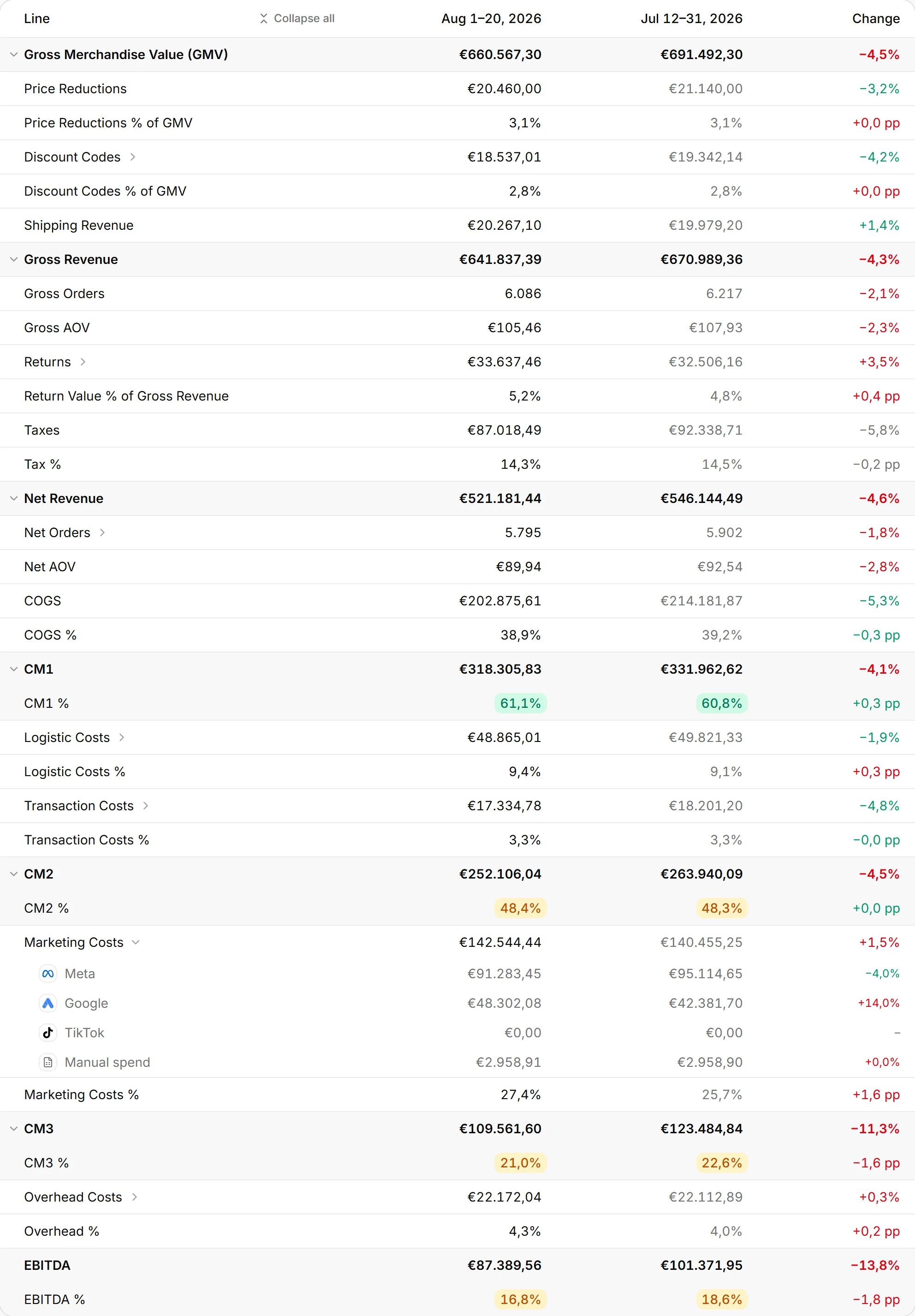
On a nouz statement the refund lands on the day it was issued: the amount, VAT included, in returns, the VAT inside it back off the tax line, and any units it names credited to cost of goods at the cost they carried on the order date. A refund by amount alone moves money and nothing else. The payment fee does not come back: Shopify Payments keeps the card fee on the original charge, and nouz never credits a fee on a refund.
Goodwill refunds are worth separating in your own records, because they behave differently from returns: no goods come back, so nothing is restocked, nothing is written down and no return handling is charged, and the cost is purely the margin handed over to keep a customer. Added up over a quarter they are a price cut nobody decided, which is the case made in partial refunds as quiet repricing.
Whatever the reason, the day rule holds. Booking the adjustment on the day it was issued keeps the original month closed, which is the property that lets two months be compared at all.