A daily P&L is a profit and loss statement for a single day. In a store it books every order, refund, cost and a daily slice of overhead to the day it belongs to, and answers what the business earned today. On a trading desk the same words mean the day's gain or loss on the positions held.
What separates it from a monthly report cut into thirty pieces is recognition: each amount lands on its own day, in the store's own timezone, so a day is a complete little statement rather than a fraction of a big one. Refunds land on their refund day, ad spend on its spend day, and fixed costs arrive as slices, a monthly cost at twelve times the month divided by 365 each day, instead of as one catastrophic Tuesday.
The trading sense shares the name and little else. A desk marks its positions to market every evening, so its daily P&L is a change in what it holds; a store's is a statement of what was sold and what it cost, line by line, built the same way as the month's and adding up to it exactly.
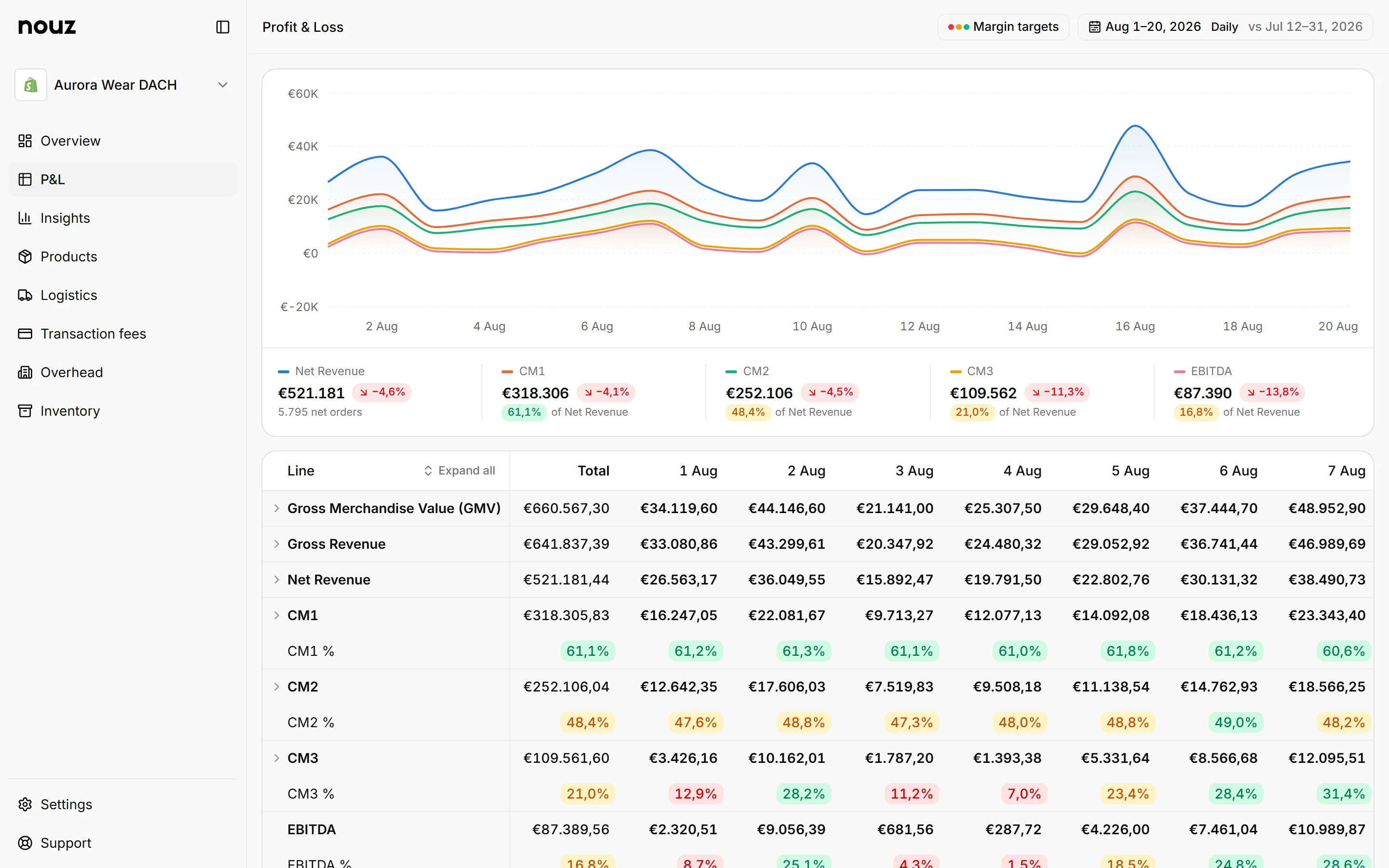
The reason to run one is speed of correction. A month-end report tells you a pricing mistake existed; a daily P&L shows it the morning after it started, while the promotion can still be stopped. On the example store the site's figures come from, 20 August closed at €40.607,66 of gross revenue and €8.308,12 of EBITDA, and every column between the two is a cost that was booked to that day on purpose.
The trade-off is honesty about noise. Single days swing with weekday, weather and one big order, so a daily statement needs its context: yesterday against the same weekday, the month so far against its fixed costs, never one bar alone. A KPI strip that puts each change on the figure it belongs to is the usual way to give it.
The daily P&L tracker is this idea as a free spreadsheet, one row per day in the same column order nouz computes; the product exists for the month the spreadsheet stops being fun to fill in.