Inventory operations

Dead stock

Inventory that has stopped selling and keeps costing.

Updated

The short answer

Dead stock is inventory with no meaningful velocity: units that will not sell within a reasonable horizon at their current price. It is not merely idle capital, it is capital that goes on costing, through storage, handling, obsolescence and the opportunity of everything the money could have bought instead.

The tell is coverage rather than age. A product with a year of cover is dead by arithmetic even if it sells one unit a week, because that is a year of cash standing still, and a store carrying several of those is financing a warehouse rather than a catalogue.

The instinct to wait for full price is usually the expensive choice. Every month of waiting adds storage and delays the reinvestment, so the honest comparison is what the stock realistically fetches now against what it will fetch later, minus the cost of holding it in between.

Preventing it is mostly a buying discipline. Ordering to a target cover rather than to a price break, and reviewing coverage per variant rather than per product, catches the sizes and colours that quietly stop moving while the parent product looks healthy. A periodic count on the inventory count sheet confirms what is really on the shelf.
Where you see it in nouz

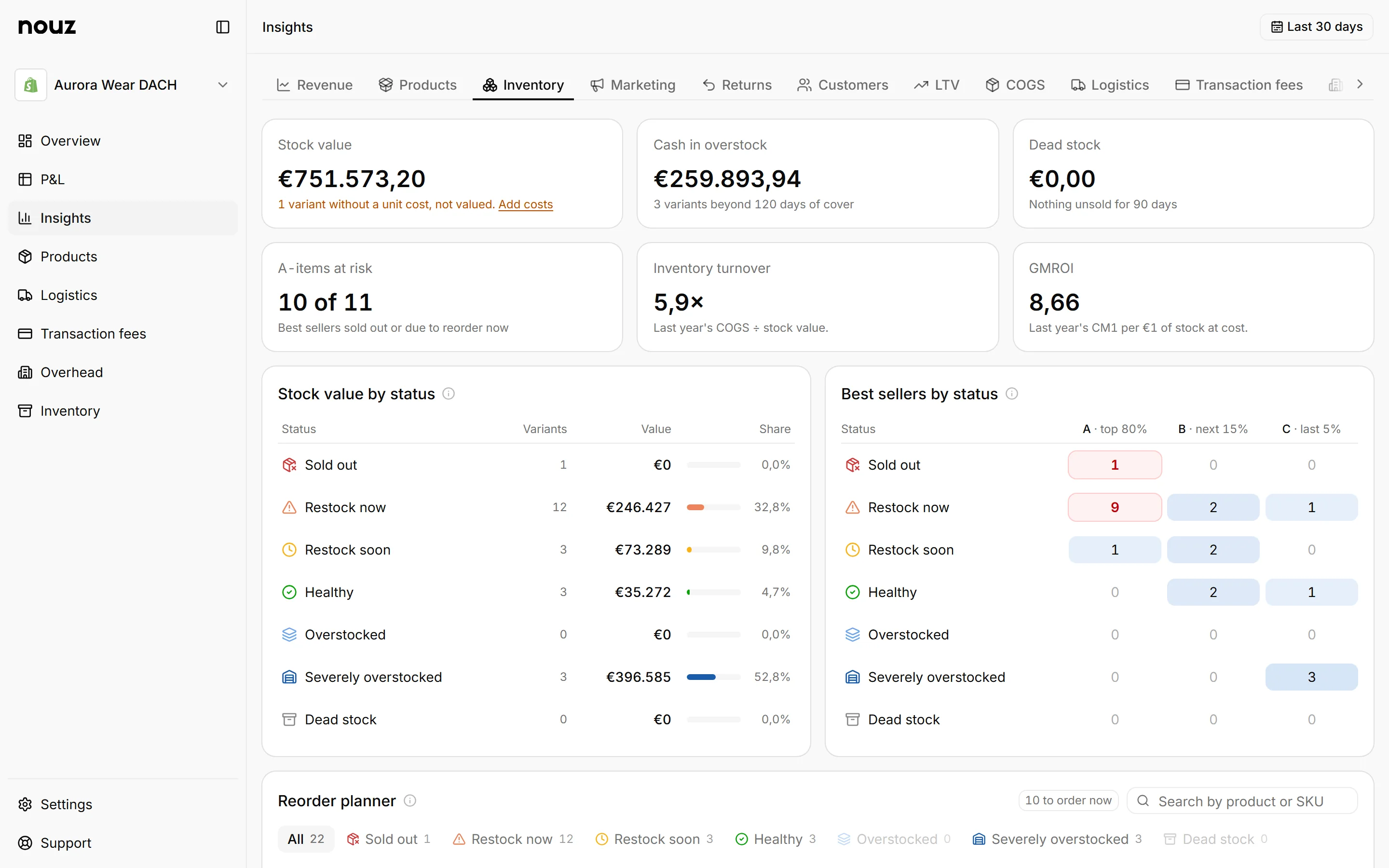
Insights, the Inventory tab: stock on hand with no sale in 90 days and none expected, valued at cost.

app.nouz.co/insights
Dead stock on the Insights Inventory tab: the value of what has not sold in 90 days.

See this on your own store, every morning.

Install nouz in minutes from the Shopify App Store. It builds your whole statement from your own orders, refunds and costs, every night, and imports every order your store has ever taken.

Your trialToday
14 days of nouz, every feature€0,00
Card needed to startNone
Access to your storeRead-only
Due today€0,00