The reorder point is the stock level at which the next purchase order has to be placed: the units that will sell during the supplier's lead time, plus a safety cover for the weeks when demand or the supplier misbehaves. Crossing it is the signal, not the empty shelf.
It turns a judgement into a threshold, which is most of what demand planning means in a small store. At 12,67 units a day, a 45-day lead time and a fortnight of safety cover, the trigger is about 748 units, which is a number a warehouse report can watch rather than a feeling somebody has on a Friday.
The comparison is against the stock position, not the shelf: units on hand plus units already on order. Forgetting the inbound shipment is the classic double order, and the cash for it leaves immediately while the stock arrives twice.
The lead time to use is the observed one, door to saleable shelf, including customs and putaway. The agreed lead time is a plan, and stock has to survive what actually happens rather than what was promised.
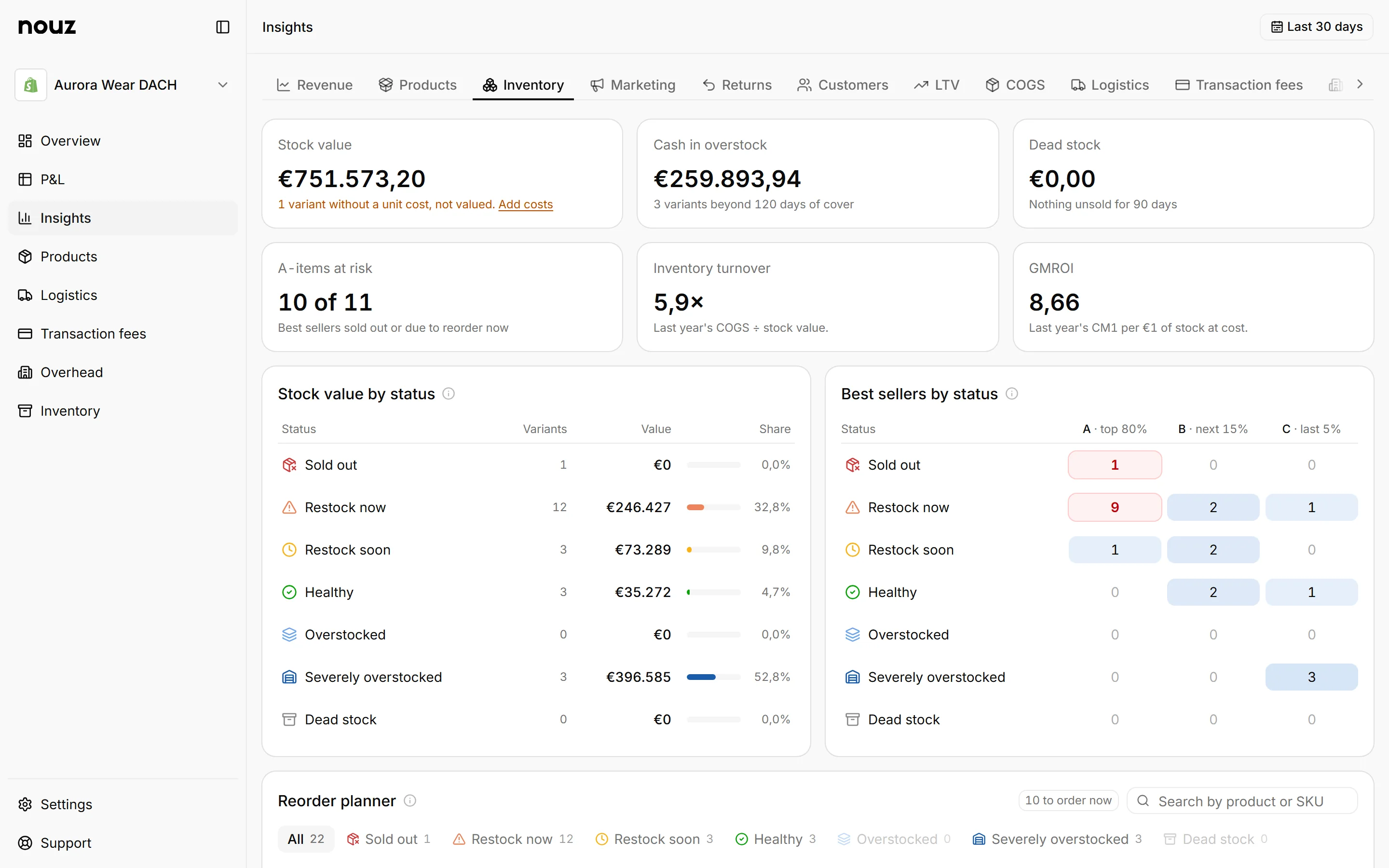
nouz turns the level into a date. The reorder planner on Insights, Inventory shows each variant's Order by day, one lead time before the stock on hand and on its way runs out at the expected pace, with a suggested quantity and what that order costs at today's unit cost. It holds no safety stock of its own: Order by is the last day to order so the new stock arrives as the last unit sells, so a cushion means ordering that many days sooner. It reads the lead time you set per product.