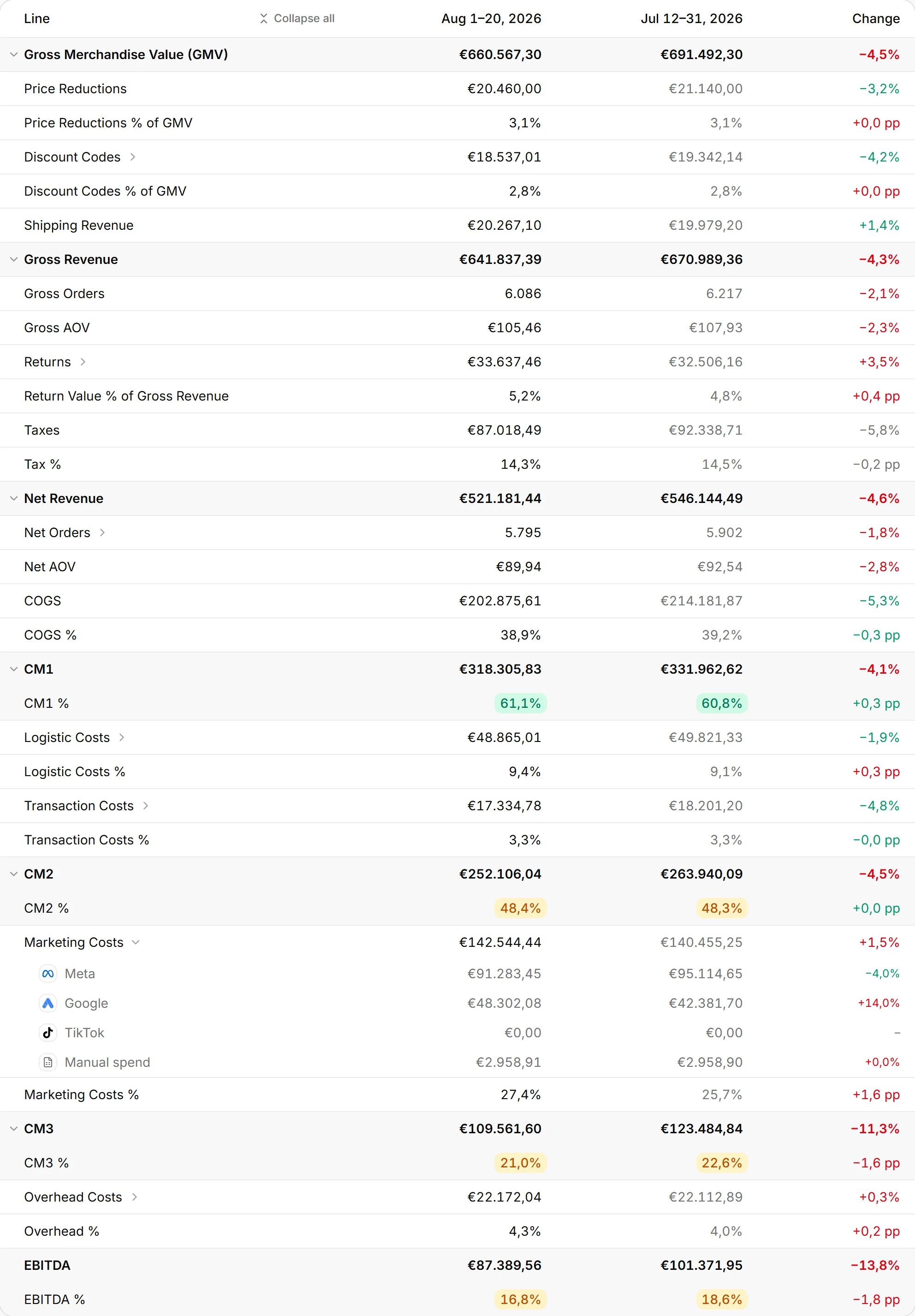
Netting a refund backwards against its original order feels tidier and is corrosive. Every time the current month bleeds, a past month improves, so no period ever settles and comparisons between them stop meaning anything. Booking the refund on the day it was issued keeps history still, at the cost of making the present month look exactly as expensive as it is. Shopify's own refund reports are easy to misread on exactly this point, as reading refund reports explains.
Value rather than money matters in one case above all. Shopify records an item removed from an order before it was paid for, in an order edit or a line cancelled before payment, as a refund of €0,00, because no money had been taken; the item still leaves the sale, so it counts in returns at its value. Where Shopify records a deliberate difference instead, such as part of the money kept, the money is what counts, a refund still pending counts once it completes, and refunded duties never count, because they were never revenue. A return fee the store keeps, a restocking fee or a return shipping fee, makes the return smaller by that fee, so a €119,00 item sent back with €16,90 kept counts €102,10.
The refund is also not the loss. Most goods come back saleable, so the refunded amount overstates the damage by their cost; and the parcel that shipped, the fee the gateway kept and the minutes at the returns bench are all real losses the refund never mentions. Netted out, the true cost of a return usually exceeds the margin the sale had earned.
A refund hands back its tax too, which is why VAT on a statement is computed on what was kept rather than on what was sold. Charging tax on gross revenue and subtracting refunds separately overstates both sides of the bridge. In nouz, expanding Returns on the P&L shows the products that came back, the refunded shipping with its tax, any return fees kept, and Refund adjustments wherever a refund's money differed from its items.