The condition of the return is what splits the two costs. An unopened unit costs only the handling; an opened or worn one costs the handling plus the difference between full price and whatever it now fetches, and stores that assume everything is resellable understate returns by exactly that difference.
Whether a return restocks at all is also what separates it from other refund types. A goodwill refund or a cancelled order never generates a physical return, so charging return processing to them would invent a cost, which is why the engine gates that charge on the restock type.
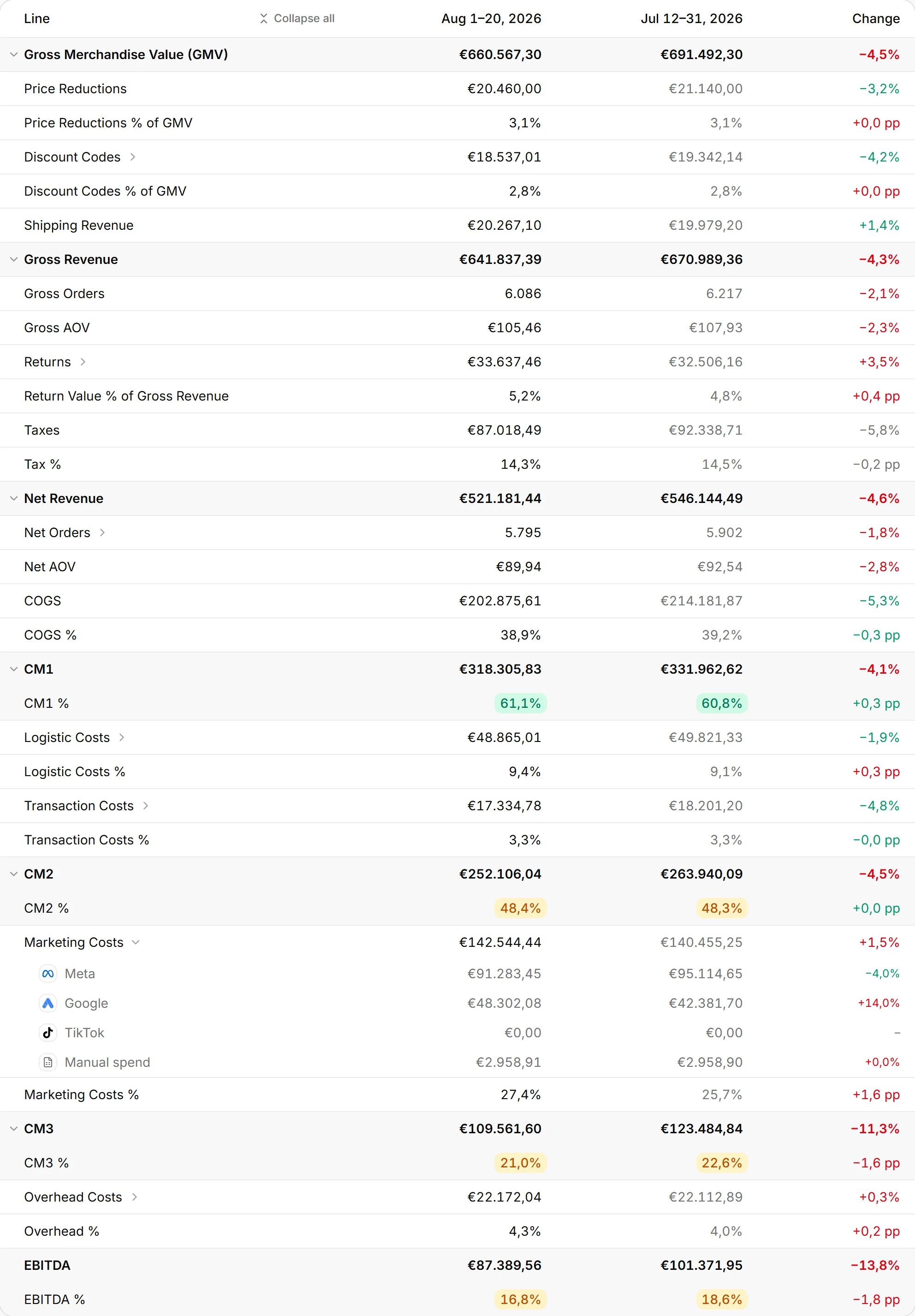
In nouz the bench work is part of the return processing rule on the Logistics page, a return label plus handling per returned shipment, booked on the day the refund is issued, and only refunds where a unit physically comes back carry it.
The cost is small per unit and concentrated by product. A product returning at three times the catalogue average is paying three times the bench cost, which is invisible in a store-level return rate and obvious the moment returns are counted per SKU.
The other restocking, refilling a shelf from a supplier, is a timing problem rather than a handling one: the order has to go out while the stock still covers the supplier's lead time. That is what a reorder point is for, and what the reorder planner on Insights, Inventory dates for every variant.