Why splits happen, what they cost and what reducing them is worth is the subject of what a split shipment really costs. The short version: a second parcel repeats every cost that is charged per parcel.
This is why nouz prices logistics per parcel rather than per order. A store shipping 1,08 parcels per order is eight percent above its own per-order packaging cost before anything goes wrong, and the stores worst affected are exactly the ones whose warehouse reports never surface it.
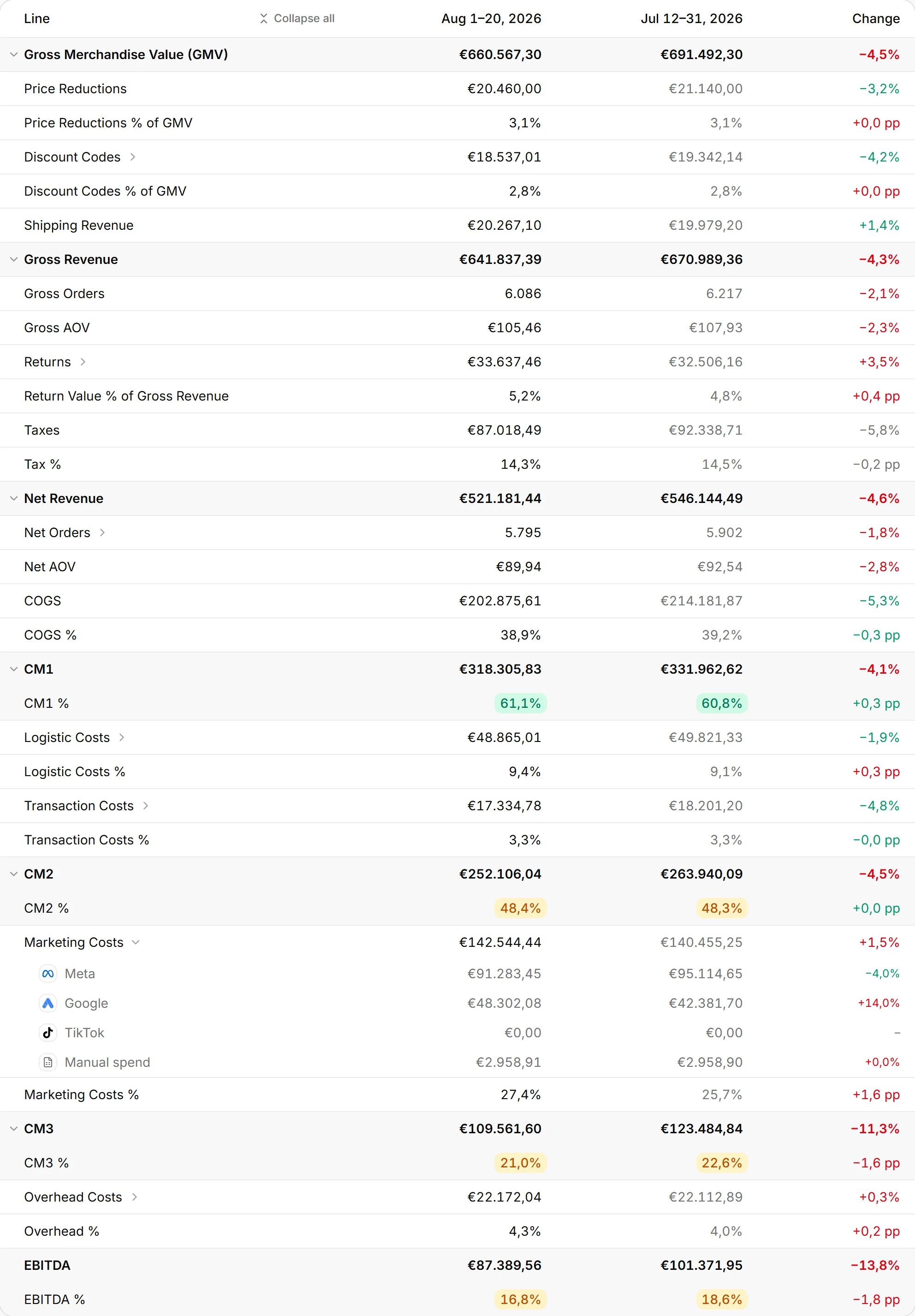
Worked through on the example store the calculators use: 706 orders a month at 1,08 parcels each is 762 parcels, 56 more than orders. If each extra parcel carries the store's full €6,40 of label, picking, box and EPR fee, the splits cost €358,40 a month, about €4.300 a year, and no per-order average shows them.
In nouz every shipment Shopify records is a parcel. An order that left in two shipments carries two shipping charges, two pick and pack bases and two lots of packaging and EPR fees, each parcel priced by its own weight or size, all on the day the order was placed. Units not yet shipped make up one pending parcel, priced the same way.
The customer usually experiences it as a problem too: two deliveries, two chances for something to go missing, and a return process that has to be explained twice. So the cost is rarely limited to the second label.
Reducing splits is mostly a stock and picking question. Holding fast-moving items in one location, and holding enough of them, removes most splits, which is one of the quieter arguments for getting cover and reorder points right.