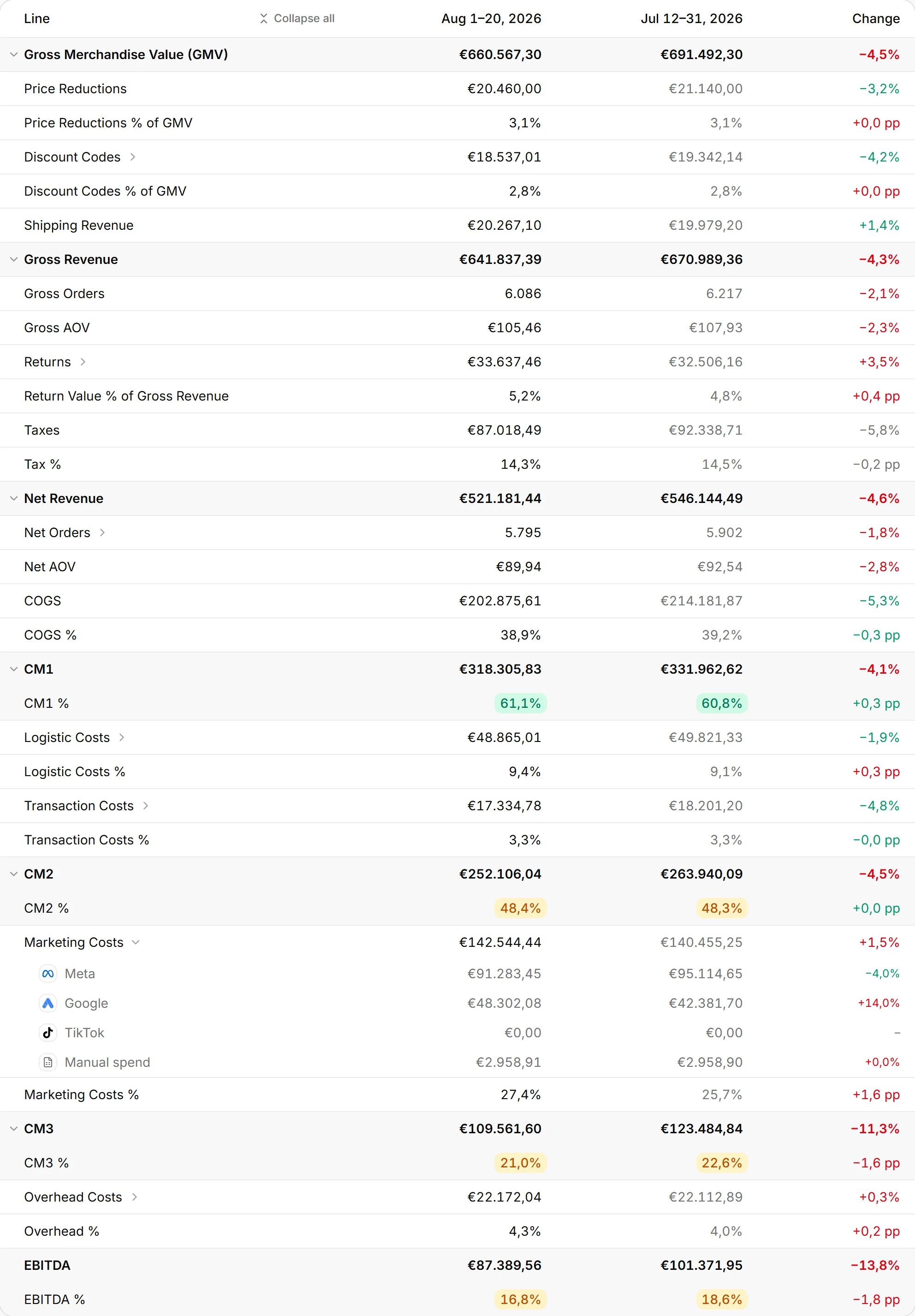
The operational meaning is the one a P&L holds, and it is the reason a falling average order value damages a store whose product margins never moved. The same 6,40 euro parcel is 7,5% of an 85 euro basket and 32% of a 20 euro one, and no discount policy or supplier negotiation changes that arithmetic. The parcel's own part, shipping, pick and pack, packaging and its EPR fee, is logistics cost per order, line 21 on a nouz statement; the fixed leg of the payment fee sits in line 23.
Split shipments are the quiet multiplier. An order that ships in two parcels pays twice for the label, the picking and the box, and any figure computed per order rather than per parcel hides it entirely.
It also sets the floor under promotional decisions. A discount that takes an order under the sum of its goods and its cost per order is selling below the line at which the sale makes the store poorer, however good the volume looks.
The advertising meaning, often written CPO, is ad spend divided by the orders it brought, and it answers a different question: what an order costs to win rather than to serve. Measured blended, all ad spend over all orders, the example store's €15.000 over 706 orders is €21,25 per order; a platform's own figure counts only the orders it claims. Against the €44,68 an average order leaves after goods, parcel and fee, that is affordable. When winning new customers is the goal, CAC is the version to watch.